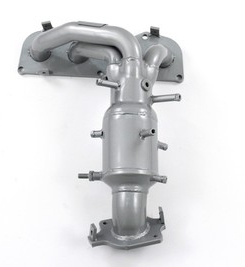
Showing posts with label DIY. Show all posts

Why do I have idle problems after battery change?

If you just replaced/disconnected your battery and your idle is crap, don't panic. Probably means you have a very dirty Throttle Body or Mass Air Flow Sensor,  both. The ECU learns to deal with the dirty Throttle Body or Mass Air Flow Sensor over time adjusting fuel/air/idle. Disconnecting the battery resets the ECU, causing a learn all over again (approx 60 miles/one day worth of stops and starts). Try cleaning your TB and MAF sensor, then try disconnecting battery. Should be good from the first minute this time, because the ECU wont have to learn to compensate for a dirty Throttle Body or Mass Air Flow Sensor.
Posted on 6:12 AM / 0 comments / Read More

Car Care Maintenance Schedule

The following is a maintenance schedule that has given me 314,000 miles without major repair to the engine, transmission, cooling, steering and braking systems. While its always a good idea to follow your owners manual, some of us don't buy into "lifetime" fluids. This does not include mechanical wear items like tires, brakes, struts, etc.

Look for deals at Autozone, AAP, Walmart, rockauto.com eBay and Amazon. For oil and filter nobody beats Walmart pricing.

If you are not in a position to change the fluids yourself, find a local shop that will change the fluids using your supplies charging a small fee. Many will do that for you.

Car Care Maintenance Schedule
  • Synthetic oil changes 7k (Mobil 1, Mobil 1 High Mileage, Pennzoil Platinum, Pennzoil Ultra. Purolator Classic, Purolator PureOne, Fram Ultra)
  • TB/MAF/PCV Valve cleaning once a year just before changing oil (throttle body cleaner, MAF cleaner)
  • 2 bottles fuel system cleaner in 1 tankful of gas once a year just before changing oil (Techron concentrate plus or Redline SI-1).
  • PS drain and fill reservoir every other oil change (see your manual).
  • Coolant drain and fills 3yrs/40k (see your manual)
  • ATF drain and fills 2yrs/30k (see your manual)
  • Brake bleed 2yrs/30k (with new pads NEVER push fluid back in)
  • Air filter 2yrs/30k (Fram)
  • Plugs 70k (Iridium, see your manual)
Posted on 1:30 PM / 0 comments / Read More

Throttle Body Cleaning

Keeping your throttle body clean is an essential part of care care maintenance. Why does my throttle body get dirty? Over time the throttle body gets dirty from oil and combustion gas vapors that come from modern PCV (positive crankcase ventilation) systems. Modern PCV systems recirculate back to the intake where gasses are re-combusted. Recirculation is via a hose which is connected somewhere close to the throttle body. During startup, operation and shutdown air intake pressure changes which can push PCV oil and combustion gas vapors back to the throttle body, coating it with deposits. This is normal and no indication of problems. Symptoms of a dirty throttle body include:
  • Poor gas Mileage. Your car's ECU (computer) will attempt to adjust the air fuel mixture to compensate for throttle plates that can't close fully. 
  • Rough idle. Same reasons as above.
  • CEL codes. Your car's ECU may think you have a vacuum leak, faulty sensor, etc resulting in various CEL fault codes
How do I clean my throttle body?
Most modern cars use an electronic throttle body with an electronic motor controlled by the ECU (also known as "drive-by-wire"). NEVER use a screwdriver or pliers to force the plates open with the key on! This can bend or damage the plates, strip the gears in the motor. With the key off and power removed the plates can be manually opened but there is still the issue of preventing the throttle plates snapping shut. Use of sharp or abrasive objects to wedge the plates open can result in damage to the seal of the plates. So for electronic throttle bodies the best way to clean them is with an assistant opening the throttle with the key turned to acc. (power, engine not running). You can also use something to depress the accelerator pedal like bricks, metal bar, etc. Most throttle bodies are easily removed with 4 screws. Because its an electronic connection, its just a connector, no accelerator cable to worry about.

Each car is different, but all require the removal of the air intake to get proper access for cleaning. There will be a few connectors and vacuum lines to remove from the air intake, take note of them. May as well clean the Mass Air flow Sensor and inspect the air filter while the air intake is off. The Mass air flow sensor requires a special electrical cleaner which goes by the name "Mass Air Flow Sensor Cleaner".

Before you close things up its a good idea to lubricate the throttle plate shaft right where it connects to the walls of the throttle body. Use a cotton ear swab to apply some motor oil or white lithium grease from a squeeze tube. 

What do I use to clean my throttle body?
A dry, no oil throttle body cleaner is best because it won't attract oil and gas vapors as fast. Some throttle bodies (like Ford) have a coating that helps seal throttle plates and prevent deposit buildup. Not knowing whether your throttle body contains one of these coatings its best to use a throttle body cleaner rather than the more potent carb and choke cleaners from decades ago. That being said, use of toothbrushes and anything abrasive should be used with caution. Usually a soft rag will do the job.
Posted on 12:16 PM / 0 comments / Read More

Put Out A P0420 CEL With $6

Unlike other CEL codes a P0420 and P0430 is not a actual failure code, its a warning that the catalyst efficiency has gone below the threshold set by the manufacturer. Newer auto manufactures set this at 90-95% (good). An actual catalytic converter "failure" has no code. A failure would be a fracturing or clogging of the catalyst media, a broken or rusted shell causing an exhaust leak. That would be accompanied by other symptoms like bad engine performance, stalling, or the catalyst efficiency threshold warning code.

The catalyst efficiency threshold set by the manufacturers is generic and does not consider the smog requirements of each state. Each state has different smog emission standards. They can be lower, higher, or not at all. Because the catalyst efficiency settings don't match the states smog requirements, you can fail the inspection for a catalyst efficiency CEL, yet pass the state smog test. Many state inspections today skip the smog tests for an OBD-II computer status check. Regardless, prior to inspection you need to extinguish all CEL's.

There are several causes for a P0420 starting with oil consumption. But we won't get into that, this discussion is about extinguishing the CEL for $6 using something called a spark plug anti fouler. The spark plug anti-fouler (also called non fouler) does not influence or change any any of the smog test emission results. The anti-fouler is not a repair to the catalytic converter so one day you will fail the state smog emissions test. Or it will plug up on you, causing stalling, etc. It is then you will need to replace the cat. But because the CEL first appears at  90-95% (good), replacing the catalytic converter could be years from now.

How it works
The pre-cat (upstream, front) O2 sensor takes an initial reading of exhaust gasses. The post-cat (downstream, rear) O2 sensor takes a second reading. The ECU compares the two. If the difference is small, the catalyst efficiency is low and you get the CEL. If the difference is large the catalyst efficiency is high, no CEL. Moving the post-cat (downstream, rear) O2 sensor out of direct exhaust flow will will result in a reading of less exhaust gas coming out of the catalytic converter. The ECU will calculate the difference as large = high efficiency. Out goes the light after a few driving cycles.

Installation
  1. Purchase the correct size Dorman HELP! spark plug anti-fouler thread size for your car. The O2 thread size is usually the same as your spark plug. There will be 2 in the package.
  2. Remove the post-cat (downstream, rear) O2 sensor and test that the thread size is correct. Don't tighten too far yet! What you will notice is the sensor tip is too long to completely screw into the anti fouler.
  3. Drill out the end of ONE anti-fouler with a 1/2" drill bit so the sensor tip can fit through.
  4. Screw the anti-fouler into your O2 sensor and screw the anti-fouler into the exhaust. 
 Note: The CEL should go out in a day or two. If not, try screwing the second un-drilled anti-fouler over the top of the drilled anti-fouler to block it off further. I recommend using just one if possible. 
Posted on 3:36 PM / 0 comments / Read More

Cleaning your VVT with Kreen

Variable Valve Timing (VVT) has become a staple of most modern engine designs. VVT operation depends on hydraulic oil pressure from a long winding path of tiny oil passages known as "vanes". Oil for the VVT system is filtered through a tiny screen, then passed to the Oil Control Valve (OCV). The OCV allows oil to pass on to the to the VVT controller/actuator. The oil pressure turns the controller which advances or retards the intake and exhaust cams. The ECU decides how much to open or close the OCV based on engine revolutions, throttle position, engine coolant temperature and intake air volume. Oil pressure is regulated, which turns the actuator to different positions.

Vulnerable deposits, a dirty VVT system can impact engine performance, gas mileage and give you annoying ticks. This is especially noticeable at startup. Changing the oil on time and the use of premium synthetic oils go a long way to keeping the system clean. But there are times where manual intervention is necessary. Before you start tearing the VVT system apart, try an oil additive called Kreen from Kano Labs. Its an industrial cleaner not sold retail, as it can be hazardous if not handled properly. Kreen is very effective at reducing hardened carbon deposits and varnish. Not a fast flush, Kreen can be added to the oil and driven while the cleaning process takes place.

The way I use Kreen is adding 3oz per qt of oil for 1,000 miles, change the oil. So for example if you change your oil every 5,000 miles you would add Kreen at 4,000. I also suggest use outside or in a well ventilated area, and transfer Kreen from its aluminum container to a glass bottle.

Kreen can also be used as a piston soak and in the gas as a fuel system cleaner. Using this product every 30,000 miles will give you a trouble free quiet VVT system. 
Posted on 4:36 PM / 0 comments / Read More

Synthetic Oil

All Additives

Recommended Additives

Best Oil Filters

 
Copyright © 2012. You DIY Auto . All Rights Reserved